Case study · Landbay · B2B fintech
Open banking payments
Moving mortgage fee payments to Pay by Bank: cheaper for the business, simpler for brokers.
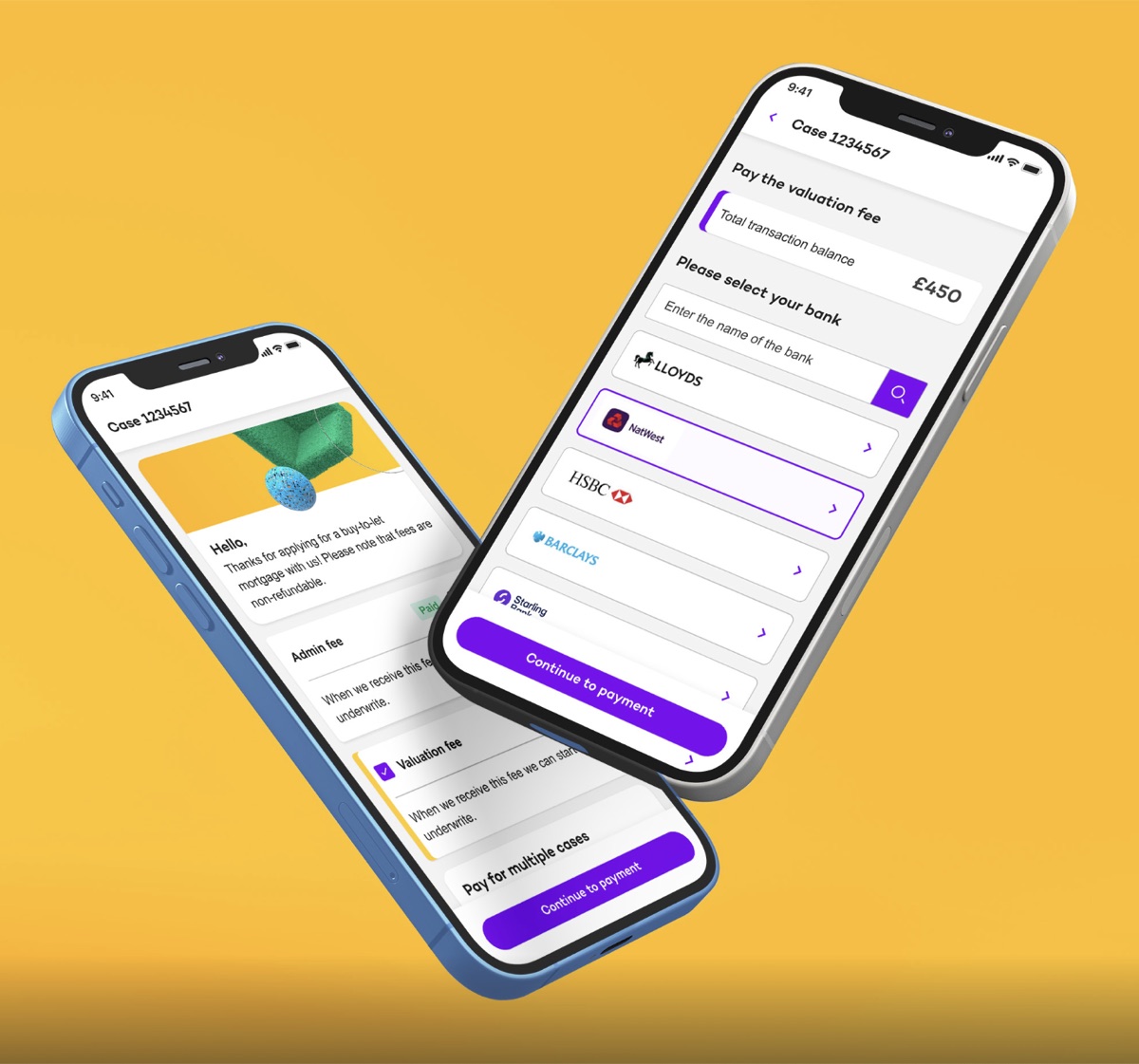
Landbay’s card payment page was being retired and card fees were on track to double. I redesigned the fee payment journey around a new Pay by Bank option with NatWest, made it work on mobile, and helped brokers make the switch. Pay by Bank lets people pay securely, straight from their bank account, without a credit or debit card.
- Role
- Product Designer
- What I did
- Survey research, user flows, wireframes, usability testing, high-fidelity UI, launch support
- Users
- Mortgage brokers and applicants
- Partners
- NatWest (Pay by Bank) and Acquired (payment provider)
- Platform
- Responsive web, designed mobile-first
- Tools
- Figma, Pendo
Impact
- 58%of users chose Pay by Bank in the first month after launch
- £100k+projected yearly saving on card fees at full adoption
- 15%faster fee processing for the Finance team, with less manual reconciliation
The problem
Brokers and applicants pay fees on each mortgage case, such as valuation, admin and product fees, through Landbay’s platform. The way they paid was costing the business more every year, and it was about to stop working.
A hard deadline
Acquired was phasing out the Hosted Payment Page that Landbay relied on. We had to migrate in time to avoid disrupting payments.
Card fees doubling
Landbay paid £55k in card processing fees in 2024, and that was projected to rise to £112k in 2025.
Manual reconciliation
The Finance team spent considerable time matching payments by hand, which slowed the back office down.
A clunky journey
Paying wasn’t seamless, the platform wasn’t mobile-friendly, and there was no way to pay straight from a bank account.
The question I set out to answerHow might we move brokers to a cheaper way of paying, without making paying any harder for them?
Goals
For the business
- Introduce Pay by Bank with NatWest as a lower-cost way to pay.
- Cut payment processing costs while keeping reconciliation automated.
- Move to Acquired’s new Hosted Checkout before the old page was retired.
For brokers and applicants
- Make paying intuitive and quick.
- Make it easy to pay on any device, including mobile.
- Keep a choice of how to pay.
My approach
- ResearchSurveyed Landbay’s broker network about how they pay today and how they see Pay by Bank.
- MapMapped the existing payment journey and designed the new flow with Pay by Bank built in.
- SketchCreated low-fidelity mobile wireframes and reviewed them early with stakeholders and brokers.
- TestRan six remote usability sessions with brokers on a Figma prototype.
- DesignProduced high-fidelity mobile designs within Landbay’s design system.
- Launch and measureSupported launch with emails and in-app guides, then tracked adoption.
Research: would brokers switch?
Before designing anything, I surveyed Landbay’s broker network to test the appeal of Pay by Bank. I asked how they pay today, what they knew and felt about Pay by Bank, whether they had concerns about security, speed or ease of use, and how willing they were to switch.
had already used Pay by Bank. Many others, especially brokers aged 45 and over, knew about it but had never tried it.
What it meantAdoption would need encouragement and reassurance, not just a new button.
preferred to pay by credit or debit card, and 7% by bank transfer.
What it meantCard payments had to stay available as a fallback.
brokers said having several ways to pay is very important.
What it meantOffer a choice, but lead with Pay by Bank.
security concerns were raised about paying by bank.
What it meantWe could promote Pay by Bank with confidence.
Two challenges to solve
1. A platform that wasn’t built for mobile
Landbay’s platform wasn’t mobile-friendly, so I had to redesign the payment flow for small screens and carefully prioritise what people see and do first.
2. An unfamiliar way to pay
Many of Landbay’s brokers are aged 45 and over. Plenty were unfamiliar with Pay by Bank and preferred the payment methods they already knew.
From flows to a tested prototype
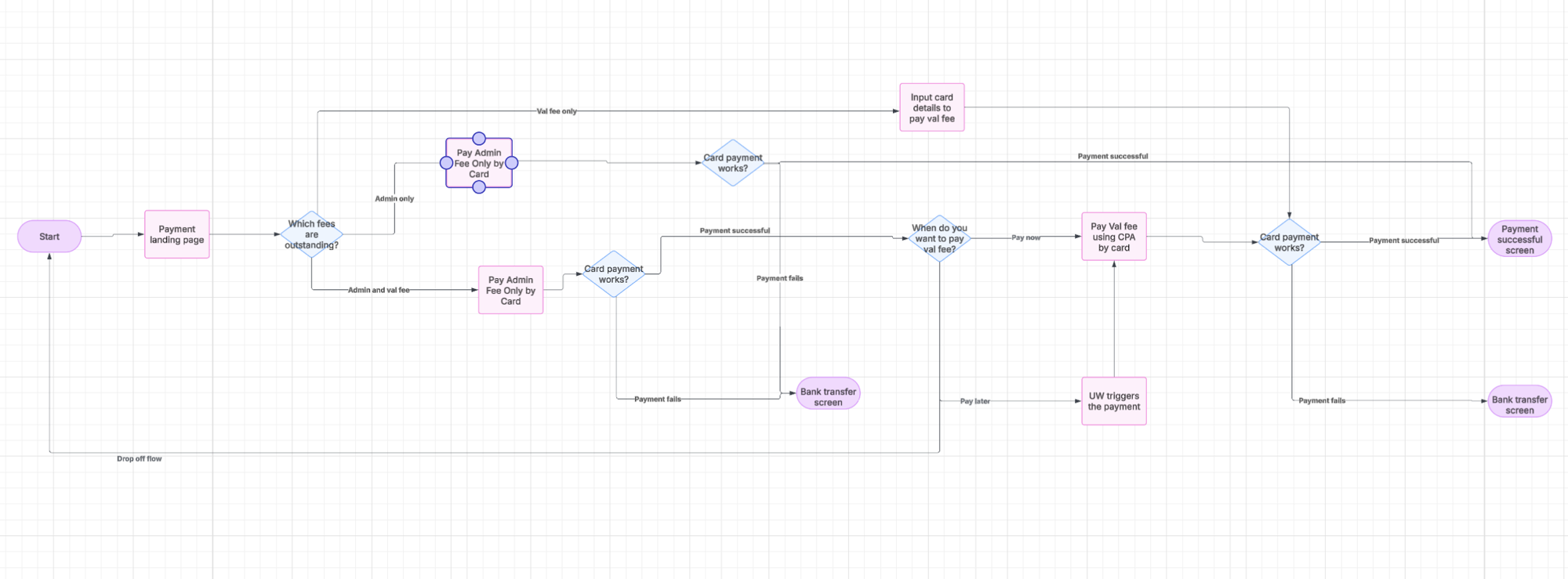
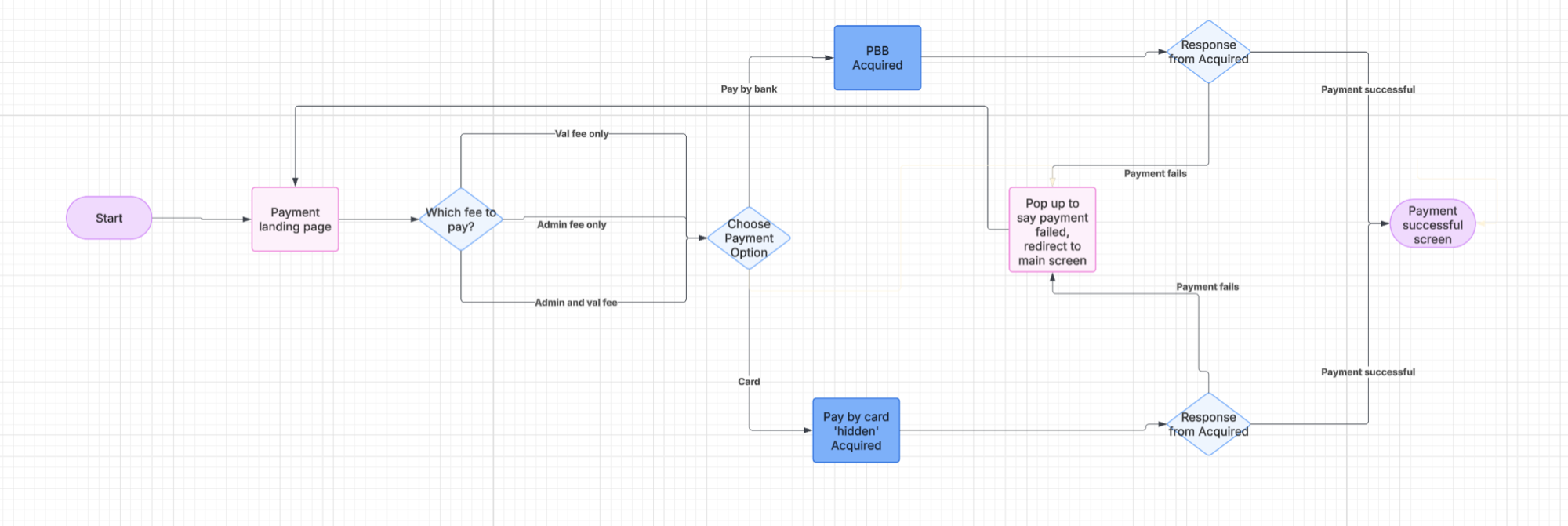
Mapping the journey
I mapped the existing payment flow, then designed a new one with Pay by Bank built in, to make paying faster, clearer and more efficient.
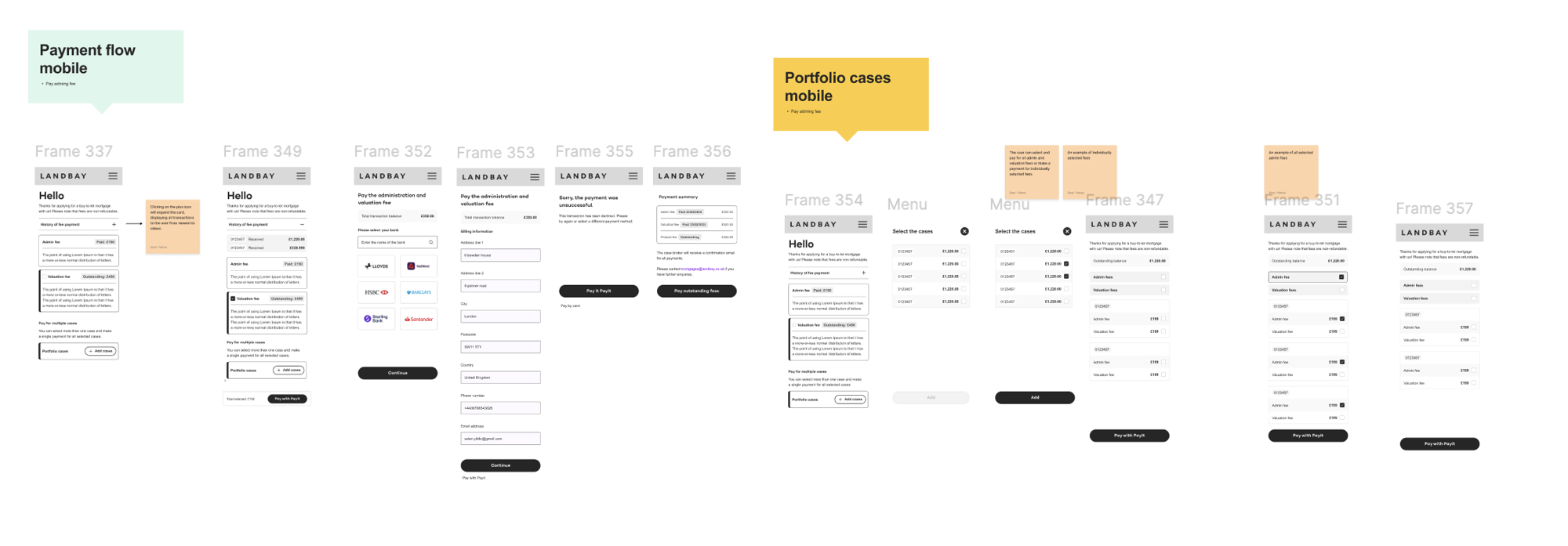
Low-fidelity wireframes and early feedback
With the new flow agreed, I created low-fidelity mobile wireframes to test the structure and priorities early. I shared them with stakeholders and brokers for quick feedback, which helped me refine the flow before investing in detailed design.
Usability testing
I then ran six remote usability sessions with brokers using a Figma prototype. Their feedback, together with stakeholder input, shaped the high-fidelity designs, which I built within Landbay’s design system.
Key design decisions
Lead with Pay by Bank, keep card as a fallback
Brokers told us they value choice, but the business needed them on Pay by Bank. So choosing a bank is the main path, and paying by card is a quieter link at the bottom of the bank list: “I cannot find my bank. Pay by card.”
Nobody is blocked from paying, and the cheapest option is always the most visible one.
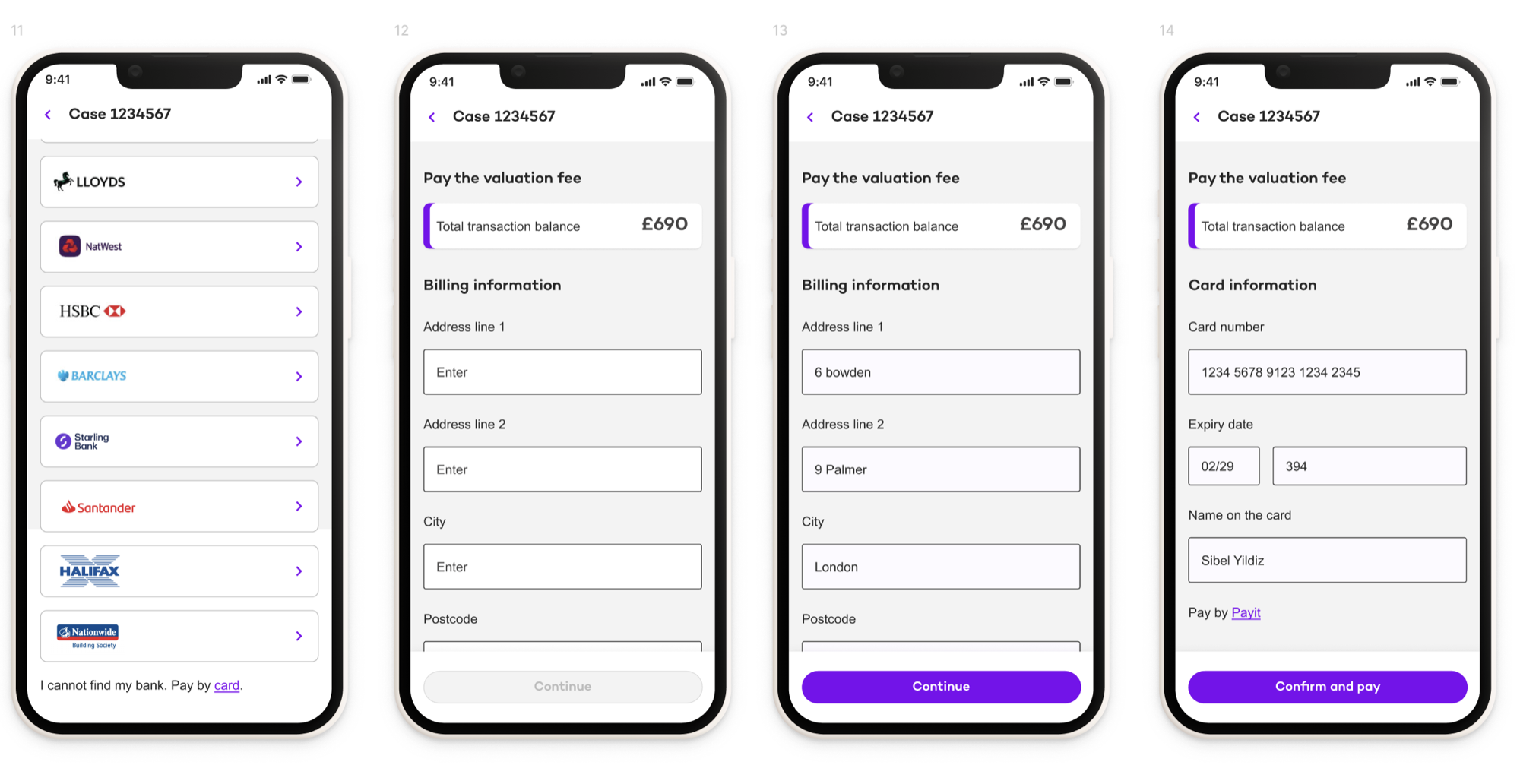
Show the banks brokers actually use
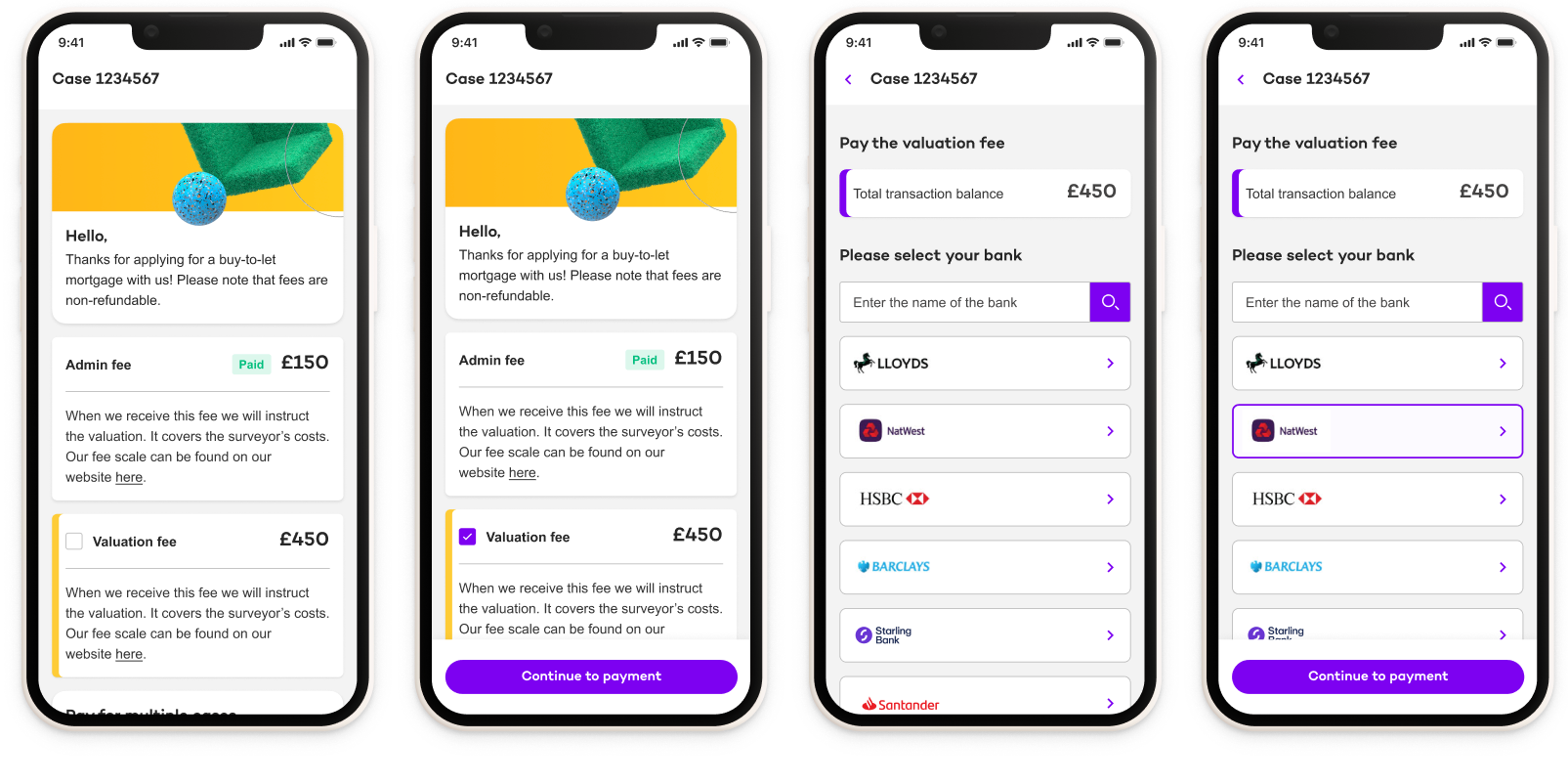
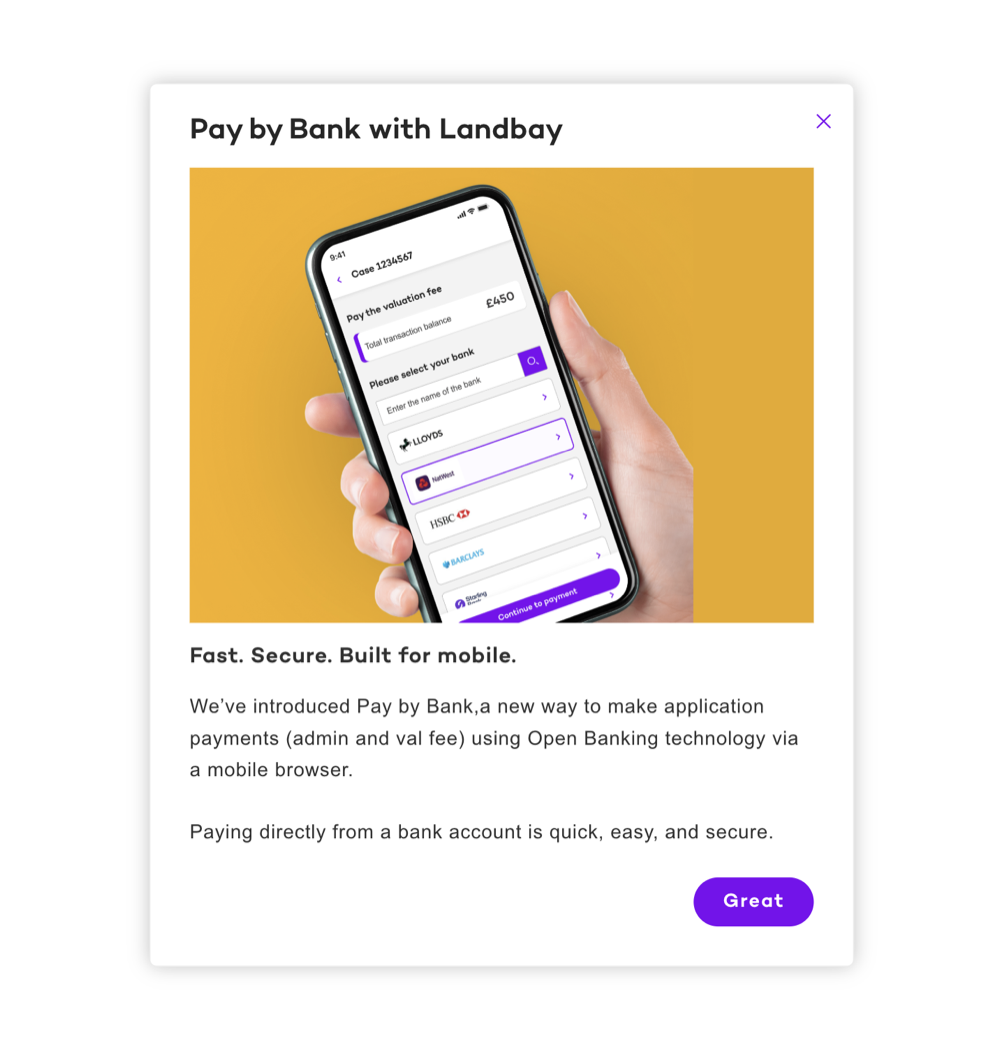
The bank list opens with the 12 banks brokers use most, with search for everything else, so most people find their bank straight away instead of scrolling a long list.
The journey for a single case takes users from choosing the fee to choosing their bank, with the amount to pay always visible at the top.
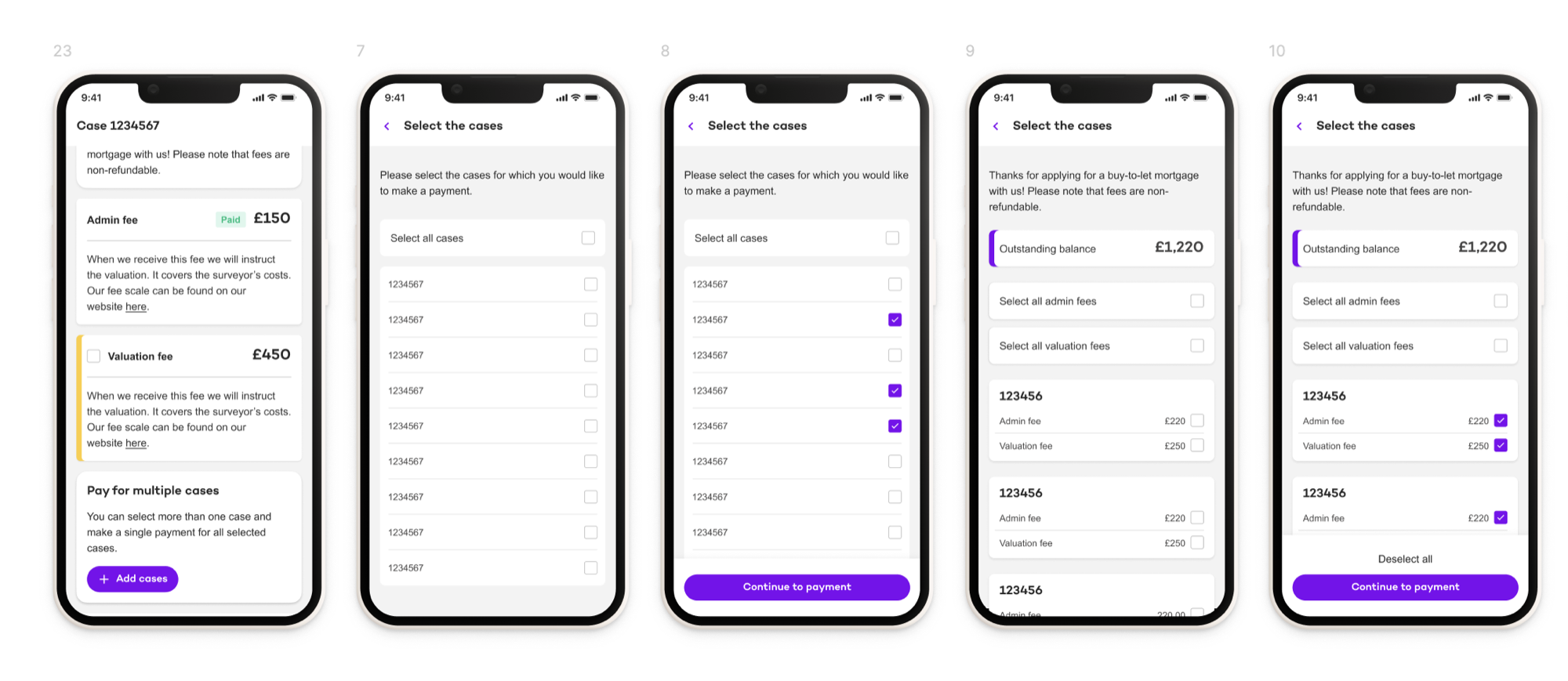
Pay for several cases at once
Brokers and applicants can have more than one case with Landbay. “Add cases” shows all of them and lets people select all or just some, then settle everything in a single payment.
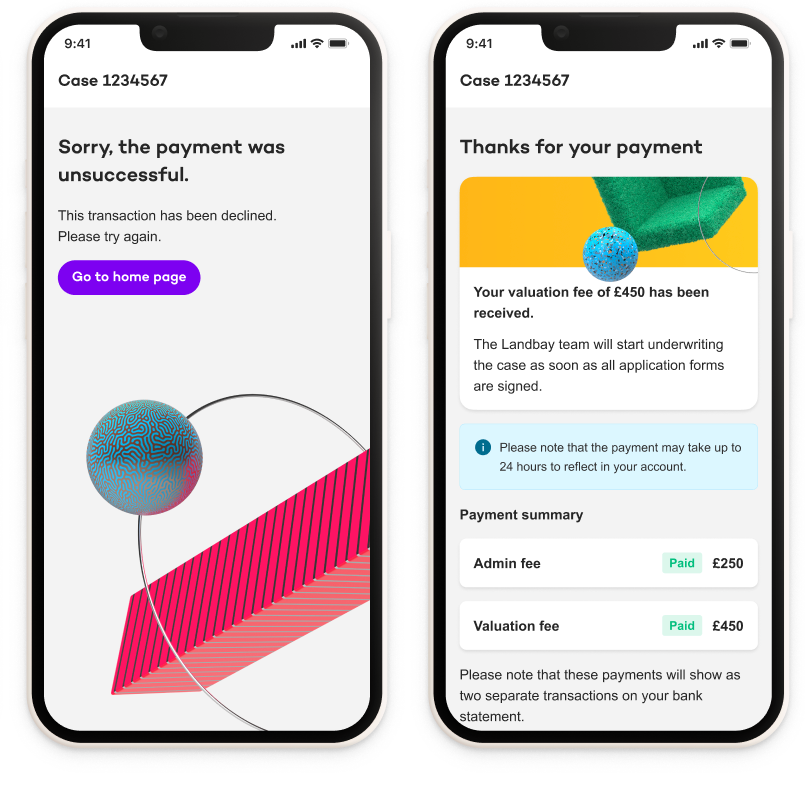
Make the outcome unmistakable
Every payment ends on a clear screen. If it worked, users see what was paid and what happens next. If it failed, they see that the payment was declined and how to try again.
Help people trust a new way to pay
Because many brokers had never used Pay by Bank, good screens weren’t enough on their own. Before launch we emailed users to introduce it, and I prepared Pendo guides inside the Broker Portal to walk brokers through the new journey.
Results
One month after launch, 58% of users chose Pay by Bank, and Landbay started saving on card fees straight away. The Finance team now processes fees 15% faster, with less manual reconciliation.
The next goal is over 90% adoption, to get the most out of the savings for the business.
What’s next
- Keep tracking Pay by Bank usage and gathering feedback to find improvements.
- Explore Google Pay and Apple Pay, balancing cost against what users prefer.
- Iterate on the mobile flow based on real-world use and accessibility feedback.
- Add more in-app guidance for users less familiar with digital payments.